
Benefits, Recommended Tests & Age-Wise Screening Guide
Quick Answer
Regular health check-ups help catch silent health conditions in their early stages. Simple tests detect high blood pressure, diabetes, thyroid problems, and cancer early. Investing in preventive care protects your long term health and lowers medical costs.
Most adults need a preventive health checkup once a year. The required tests depend on age, gender, and health history.
In busy cities like Bengaluru, stress and hectic routines make it easy to ignore small symptoms. Most people visit a doctor only when they fall ill. However, many serious medical conditions develop quietly without symptoms.
Even if you feel healthy, routine tests catch health problems early. Early treatment is easier and far less expensive. Padmashree Diagnostics in Vijayanagar, Bengaluru has provided reliable diagnostic services since 2000. This guide explains the importance of health checkups, key blood tests, and screening needs for each age group.
1. Benefits & Importance of Regular Health Check-Ups
A preventive health checkup is one of the best tools in modern medicine. Instead of reacting to illness, routine care keeps you ahead of potential risks. Here are the core benefits of health checkups:
| Benefit | Why It Matters |
|---|---|
| Early disease detection | Identifies silent conditions like hypertension, diabetes, and early-stage cancer before symptoms appear |
| Lower treatment costs | Preventive screening is far less expensive than treating an advanced illness or hospitalisation |
| Better treatment outcomes | Conditions caught early respond faster and more fully to treatment |
| Ongoing monitoring | Helps track existing conditions such as thyroid, diabetes, or high cholesterol |
| Personal health baseline | Builds a health history so your doctor can spot meaningful changes over time |
| Peace of mind | Confirms good health and reduces health-related anxiety |
Why Preventive Care Matters in India
- Cardiovascular disease causes many deaths in India. Heart attacks often occur without warning.
- Thousands of people have unmonitored diabetes or hypertension. A basic screening test catches these hidden issues.
- Regular checks have reduced the risk of sudden health emergencies.
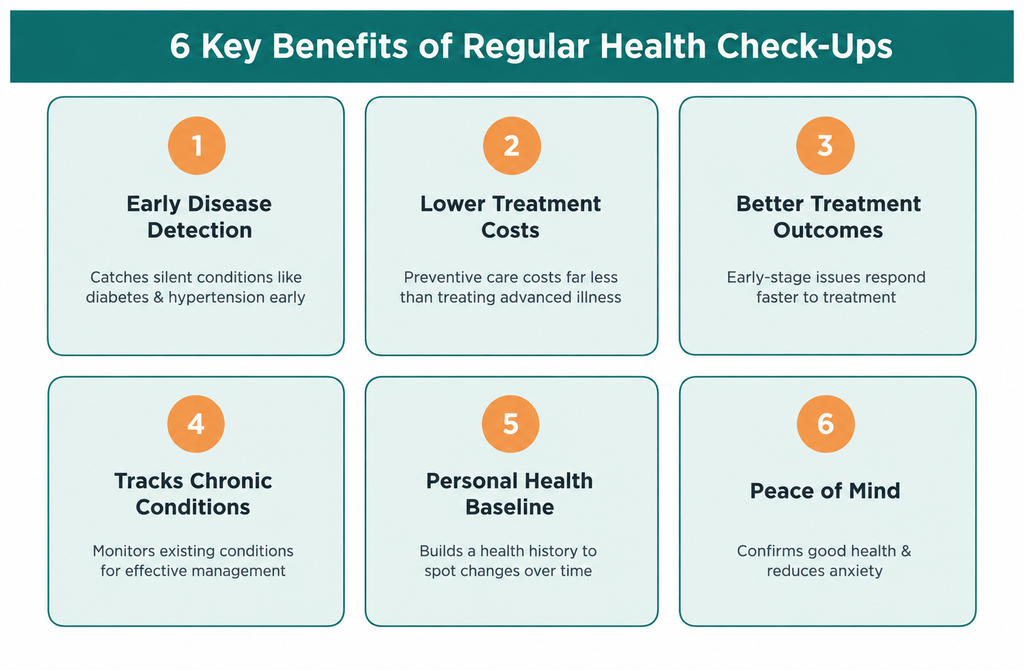
Infographic 1: 6 Key Benefits of Regular Health Check-Ups
2. What Health Tests Should Be Done Regularly?
A full-body checkup does not require every test available. Instead, focus on essential recommended health tests that detect common, preventable illnesses.
| Health Test | What It Screens For | Recommended Frequency |
|---|---|---|
| Blood Pressure Check | Hypertension (the “silent killer”) | Every visit / at least annually |
| Fasting Blood Sugar & HbA1c | Diabetes and prediabetes | Annually (6 months if at risk) |
| Lipid Profile | Cholesterol levels, heart disease risk | Every 1–2 years after age 20 |
| Complete Blood Count (CBC) | Anaemia, infections, blood disorders | Annually |
| Liver Function Test (LFT) | Liver health, fatty liver, hepatitis markers | Annually |
| Kidney Function Test (KFT) | Kidney health, creatinine, urea levels | Annually |
| Thyroid Profile (TSH, T3, T4) | Thyroid disorders affecting metabolism | Every 1–2 years |
| ECG / Cardiac Screening | Heart rhythm and cardiac risk | Annually after age 30–40 |
| Urine Routine & Microscopy | Kidney and urinary tract issues | Annually |
| Vitamin D & B12 | Deficiencies affecting energy, bone & nerve health | Annually |
| Cancer Markers / Screening | Breast, cervical, colorectal & prostate cancer risk | Age- and gender-specific (see Section 3) |
| Eye & Dental Check-up | Vision changes, oral health | Annually |
How to Prepare for Your Check-Up
- Fast for 8–12 hours before blood sugar and lipid profile and certain hormone tests. You can drink plain water.
- Bring past medical reports and a list of current medicines.
- Avoid heavy exercise and alcohol for 24 hours before your test.
- Wear loose clothing for scans or ECGs.
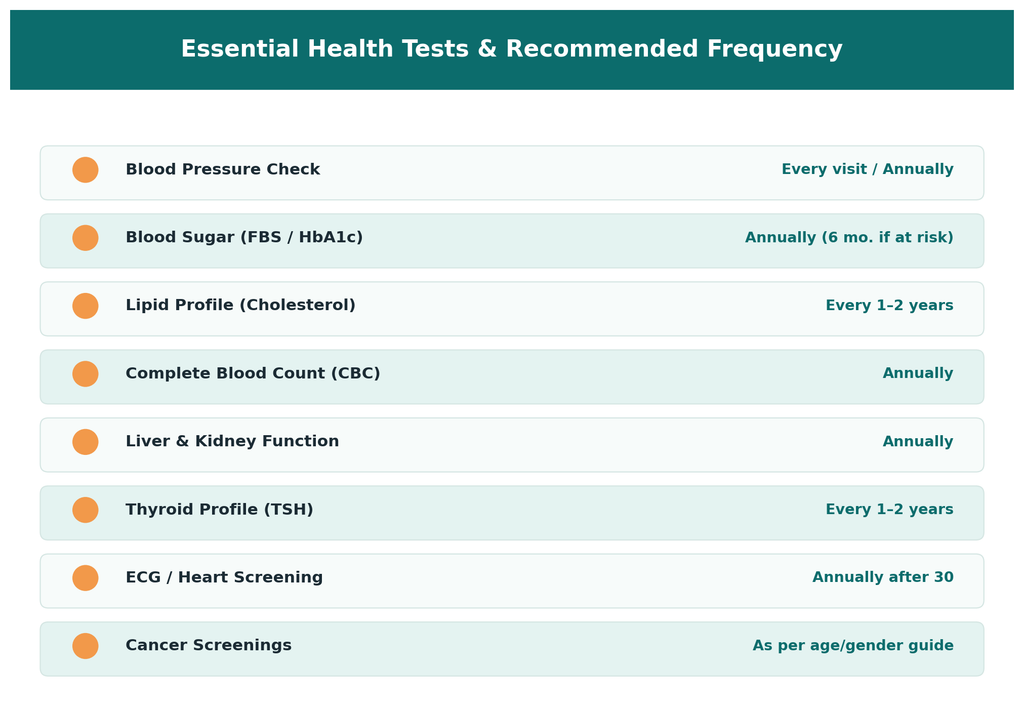
Infographic 2: Essential Health Tests & Recommended Frequency
3. Age-Wise Health Screening Criteria
Health risks evolve over time. This age-wise health screening guide outlines recommended checks for each stage of life.
| Age Group | Recommended Screenings |
|---|---|
| 20–30 years | General physical exam, BP, blood sugar, BMI, CBC, dental & eye check, cervical screening for women (from age 21) |
| 30–40 years | Add lipid profile, thyroid profile, liver & kidney function, ECG, breast self-exam / clinical exam for women |
| 40–50 years | Add cardiac risk assessment, diabetes screening every 6–12 months, mammogram (women), bone density baseline, cancer marker tests as advised |
| 50+ years | Add colonoscopy (every 5–10 years), prostate screening (men), bone density (women, post-menopause), vision & hearing tests, comprehensive cardiac evaluation |
Special Risk Factors
- Family History: Family risk of heart disease, diabetes, or cancer means starting tests earlier.
- Women’s Health: Schedule regular pap smear tests, mammograms, and bone density scans.
- Men’s Health: Men over 50 should discuss prostate cancer screening with their doctor.
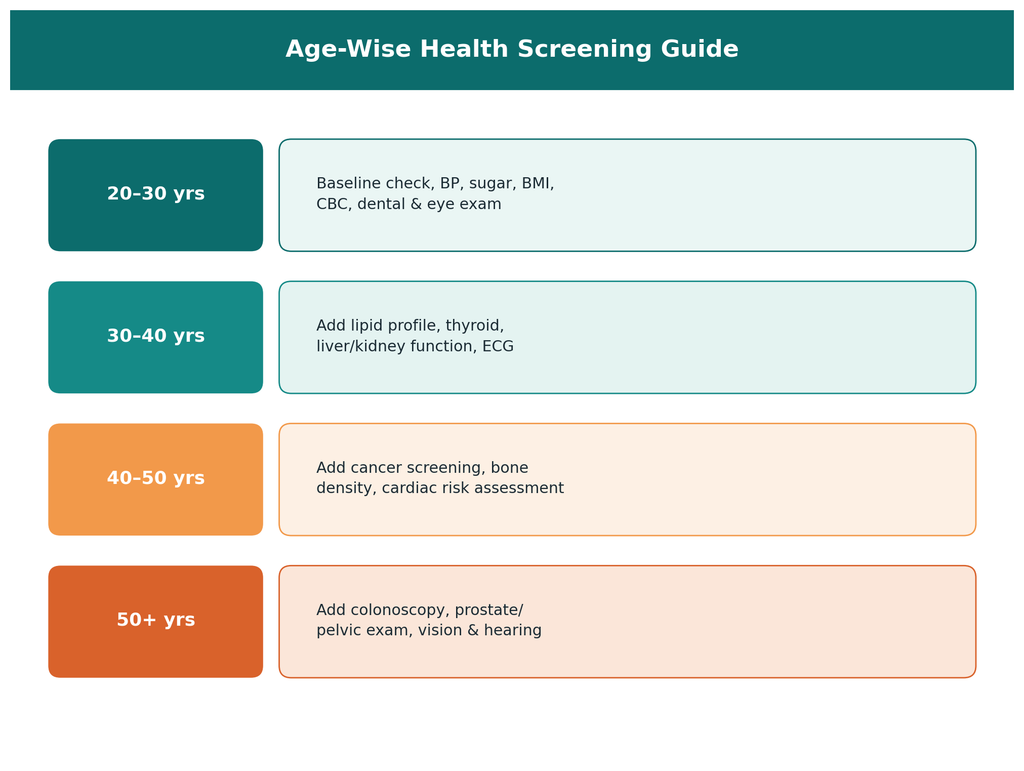
Infographic 3: Age-Wise Health Screening Guide
Choosing the Right Diagnostic Centre
Accurate test results depend on quality laboratory standards. Choose an accredited center with modern equipment, fast reports, and expert doctors.
Padmashree Diagnostics in Vijayanagar has served Bengaluru since 2000. We offer pathology, radiology, cardiology, and consultations under one roof.

